

UTunnel for SMBs: Built for GDPR Complia…
Wondering if UTunnel is GDPR compliant or how it fits into your comp…
 July 23, 2025
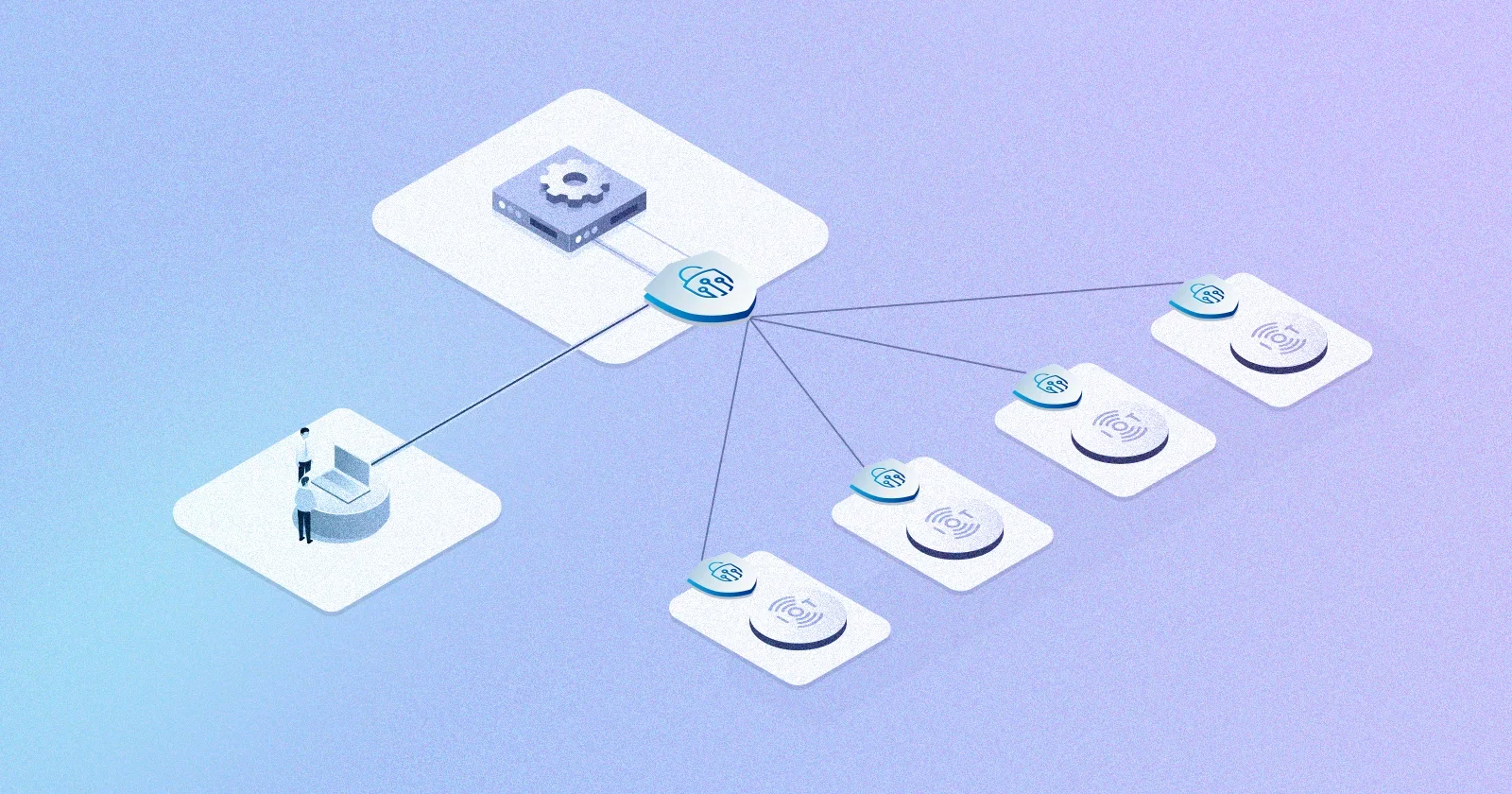
Are you still relying on standard setups to keep your IoT applications connected? Traditional solutions struggle when devices need to talk to each other across networks. You end up with workarounds that are slow and complex and leave your systems exposed.
We believe there’s a better way. With the right approach, IoT remote access can be simple, secure, and built for the way your business actually runs. That’s where MeshConnect comes in. Let’s find out how it helps simplify remote connectivity for IoT applications.
For IoT to deliver real outcomes, remote connectivity must be reliable and secure. However, the way they connect remotely often introduces issues that hold businesses back. These issues are not always obvious at first, but they affect performance, security, and long-term growth.
Here’s how MeshConnect tackles them:
Many apps are built on weak foundations, insecure defaults, outdated software, or communication paths that leave openings for attackers. Once exploited, these gaps compromise the entire application and the workflows that rely on it.
MeshConnect takes a Zero Trust Network Access (ZTNA) approach to reduce these risks. Instead of exposing the entire network, it grants access only to the resources an application requires. With granular policies and the ability to track user activity, it becomes easier to protect IoT applications without adding extra complexity for your team.
With MeshConnect, IoT applications can keep data moving without the usual interruptions. Its WireGuard tunnels and dynamic IP support mean applications don’t break when networks shift. For users, that means real-time data continues to flow where it’s needed.
Traditional setups often fail here. They depend on static IPs or open ports, which are fragile in changing environments. When connections drop, applications lose the steady streams they rely on, and business operations slow down.
IoT applications often handle large volumes of sensitive information. In healthcare, for example, patient data moves between connected monitors, apps, and remote systems. Without the right controls, this flow of information becomes a major IoT security risk. Weak encryption or poor visibility makes it easier for data to be exposed.
MeshConnect addresses this by creating end-to-end encrypted tunnels for every connection. Data from IoT applications stays private, even when sent over public networks. With centralized visibility, admins can monitor access in real time and keep applications compliant with data privacy standards.
MeshConnect makes it easy to bring IoT applications under control. With a centralized web console and streamlined site links, management stays simple even as new applications are added. Teams can configure, monitor, and update without needing complex setups.
Many organizations struggle with this. IoT applications often span gateways, controllers, and endpoints across different locations. Without a clear way to manage them, every update or change turns into extra work.
IoT applications rarely run in a single environment. Some are built on cloud platforms like AWS or Azure, while others depend on on-prem systems or edge deployments. Mixing these setups often creates gaps, making it difficult for applications to communicate and share data smoothly.
MeshConnect solves this by supporting integration across cloud and on-prem environments. With the MeshConnect Agent linking these environments, applications can work together as part of one connected mesh. This gives businesses the flexibility to expand their IoT use cases without worrying about compatibility issues.
MeshConnect makes growth easier by creating multi-site mesh networks with policy-based access control. As more IoT applications come online, they can be added without breaking existing setups or creating new risks. Policies keep access precise, so scaling doesn’t mean losing control.
For many organizations, expansion often adds complexity. Moving from a handful of applications to a large deployment often requires reworking networks and access rules, which slows down projects and increases costs.
Remote connectivity is only part of the picture. To get real value from IoT applications, businesses also need to follow proven practices and adopt the right IoT security solutions that strengthen protection and reduce risks.
Here are a few practices that go beyond fixing problems and prepare for what’s next.
Ready to strengthen your IoT applications? MeshConnect helps you secure and scale IoT applications without the usual complexity.
MeshConnect works well for IoT applications, but it isn’t limited to them. It can also connect corporate networks, remote offices, and cloud resources under one mesh.
The setup is designed to be simple. You don’t need major infrastructure changes, and most of the heavy lifting happens through the MeshConnect console.
Yes. MeshConnect uses dynamic IP adaptability and outbound tunnels so your applications stay connected without relying on static IPs or risky open ports.
MeshConnect is built to grow with you. With policy-based access and multi-site networking, new applications can be added without disrupting existing ones.
Absolutely. Tools like MeshConnect simplify remote access, but best practices like regular updates, audits, and staff training are what keep IoT security strong.
Wondering if UTunnel is GDPR compliant or how it fits into your comp…
July 23, 2025
Are standard firewalls and other conventional methods not working ou…
July 14, 2025

When someone connects to your business network, do you really know w…
July 09, 2025
